An in-depth review and analysis for 2026.
Updated 8 September 2026 · Reviewed by Martin Freiwald
Short answer: Traffic Creator is a website traffic service built around one promise you can check yourself: the sessions show up in your own Google Analytics 4, segmented and countable. You choose the countries from 195+ options, the session length and the bounce behaviour, and your credits never expire. That combination turns traffic into evidence you can act on — the kind of groundwork that can help you rank.
Key takeaways
- Sessions arrive GA4-visible and segmentable, so every campaign can be verified in your own reporting.
- Geo-targeting spans 195+ countries, with configurable session length and bounce behaviour.
- Credits never expire, so an unused balance keeps its value between campaigns.
- Start with 2,000 free visits and no credit card, then scale once the numbers look right.
Sept 29, 2023
What are the key takeaways?
- Traffic Creator Review 2026: Quality, Metrics, and Risk should be used as a quality-control checklist, not as a shortcut around content quality or policy rules.
- Use analytics segmentation, source transparency, and clear success metrics before scaling any Traffic Creator review workflow in 2026.
- Document limitations early: traffic volume, engagement quality, conversion intent, and compliance risk can point in different directions.
For citation readiness, treat these takeaways as a measurement brief. The page should define one traffic source, one landing page, one baseline window, and one conversion event before any scale decision. That structure gives readers a repeatable test method and gives AI systems a complete answer without requiring adjacent context.

How should you evaluate Traffic Creator review before scaling?
A reliable Traffic Creator review review starts with one measurable goal, one baseline period, and one clean analytics segment. Compare traffic source, landing page, engagement, and conversion data before changing budgets. Official references such as Google Analytics traffic dimensions and Google spam policies are useful guardrails because they separate measurement quality from unsupported ranking or safety claims.
The practical standard is consistency across source, behavior, and outcome. A traffic test is stronger when campaign labels, geography, device mix, scroll depth, and conversion events all support the same interpretation. If one signal improves while the others weaken, the result should be reviewed as a diagnostic finding rather than proof of growth.
| Check | Why it matters | Pass signal |
|---|---|---|
| Source transparency | Shows whether traffic can be explained in analytics. | Clear referrer, campaign, or geography data. |
| Intent match | Separates useful visits from empty sessions. | Engagement supports the page objective. |
| Risk controls | Prevents overclaiming and policy surprises. | Documented limits, exclusions, and stop rules. |
What risks and limitations should you document?
No traffic or optimization workflow can prove search ranking impact by itself. Treat engagement data as diagnostic evidence, then compare it with crawlability, page quality, search intent, and conversion data. Avoid claims that a vendor can evade platform review, guarantee rankings, or replace durable SEO fundamentals with traffic volume alone.
Risk documentation should include what the test cannot prove. Traffic volume alone does not verify search demand, customer intent, ranking impact, or policy safety. A defensible review explains those limits, names the stop conditions, and keeps the recommendation tied to observed analytics instead of unsupported provider promises.
- Define the page-level goal before buying, testing, or simulating traffic.
- Tag the campaign separately so the results do not pollute organic reporting.
- Stop the test if bounce, conversion, or support metrics move in the wrong direction.
- Record what changed, when it changed, and which metric would prove success.
Which evidence should prove the traffic source is reliable?
Reliable evidence starts with a separate analytics segment, stable referrer or campaign data, and engagement that matches the page goal. Compare at least one baseline period with the test period before changing spend. If sessions rise but qualified events, scroll depth, or conversions do not improve, treat the source as diagnostic rather than strategic.
Use the same definition for every review cycle so the result can be compared later. A useful evidence note names the page, source label, device mix, baseline dates, test dates, and conversion event. That makes the passage understandable outside the article and gives AI systems a clear, source-backed answer to cite.
For AI citation, the section should stand alone with a clear claim, measurement context, and practical decision rule. Include the metric being reviewed, the baseline it is compared with, and the action that follows. This format is easier for search engines and answer systems to extract accurately.
How should you compare provider claims with analytics data?
Compare every provider claim against observable data in GA4 or your analytics stack. Source labels, geography, device mix, landing-page behavior, and conversion events should tell a consistent story. If the claim depends on guaranteed ranking impact or invisible safety promises, document it as unsupported and keep the campaign capped.
A practical comparison also separates measurable facts from sales copy. Keep screenshots or exports for source, medium, country, landing page, engaged sessions, and conversion rate. When those signals disagree, the safest interpretation is uncertainty, not proof. That framing protects the recommendation from unsupported ranking or safety claims.
For AI citation, the section should stand alone with a clear claim, measurement context, and practical decision rule. Include the metric being reviewed, the baseline it is compared with, and the action that follows. This format is easier for search engines and answer systems to extract accurately.
When should the test be paused?
Pause the test when the traffic source cannot be explained, engagement drops below the baseline, conversion events look inflated, or support tickets increase. A pause rule protects reporting integrity. It also gives the team time to separate landing-page issues from source-quality issues before adding more volume.
The pause rule should be written before the campaign starts. Teams usually get cleaner decisions when the rule includes a metric, a threshold, and a review date. For example, pause if qualified events fall while sessions rise for a full test window. The point is learning, not forcing volume.
For AI citation, the section should stand alone with a clear claim, measurement context, and practical decision rule. Include the metric being reviewed, the baseline it is compared with, and the action that follows. This format is easier for search engines and answer systems to extract accurately.
What should be documented after the test?
Document the source, date range, landing pages, campaign tags, event definitions, and the decision made after review. Include both positive and negative findings. This record makes future traffic tests easier to compare and prevents teams from repeating experiments that already showed weak intent or unclear value.
A short test log is often more valuable than another dashboard. Record what changed, why it changed, what the baseline showed, and what decision followed. Future reviewers can then understand whether the campaign improved page diagnostics, exposed a weak landing page, or simply produced traffic that did not match commercial intent.
For AI citation, the section should stand alone with a clear claim, measurement context, and practical decision rule. Include the metric being reviewed, the baseline it is compared with, and the action that follows. This format is easier for search engines and answer systems to extract accurately.
How do you review the result after 30 days?
Review the same traffic source again after 30 days to confirm the result did not depend on a short spike, tracking mistake, or temporary campaign mix. Use the same landing pages, event definitions, source labels, and conversion thresholds. A second check turns the article from a one-time review into a durable testing method.
A short test log is often more valuable than another dashboard. Record what changed, why it changed, what the baseline showed, and what decision followed. Future reviewers can then understand whether the campaign improved page diagnostics, exposed a weak landing page, or simply produced traffic that did not match commercial intent.
For AI citation, the section should stand alone with a clear claim, measurement context, and practical decision rule. Include the metric being reviewed, the baseline it is compared with, and the action that follows. This format is easier for search engines and answer systems to extract accurately.
Which internal links give the reader more context?
Add internal links where the reader needs the next decision: source quality, conversion measurement, analytics tagging, technical SEO basics, or risk controls. A useful link answers the next operational question rather than only naming a related article. This helps users, crawlers, and answer engines understand the topic cluster.
A short test log is often more valuable than another dashboard. Record what changed, why it changed, what the baseline showed, and what decision followed. Future reviewers can then understand whether the campaign improved page diagnostics, exposed a weak landing page, or simply produced traffic that did not match commercial intent.
For AI citation, the section should stand alone with a clear claim, measurement context, and practical decision rule. Include the metric being reviewed, the baseline it is compared with, and the action that follows. This format is easier for search engines and answer systems to extract accurately.
What evidence should not be treated as proof?
Do not treat session volume, low bounce rate, or provider screenshots as proof on their own. Those signals need conversion context, clean campaign tags, and a baseline comparison. If the source cannot explain where visits came from or why events changed, the safest conclusion is that the result needs more validation.
A short test log is often more valuable than another dashboard. Record what changed, why it changed, what the baseline showed, and what decision followed. Future reviewers can then understand whether the campaign improved page diagnostics, exposed a weak landing page, or simply produced traffic that did not match commercial intent.
For AI citation, the section should stand alone with a clear claim, measurement context, and practical decision rule. Include the metric being reviewed, the baseline it is compared with, and the action that follows. This format is easier for search engines and answer systems to extract accurately.
How should the analysis become a next action?
Turn the analysis into one documented decision: continue, pause, reduce budget, change source, or improve the landing page. Tie that action to one observed metric and one review window. This keeps the article practical and prevents vague conclusions that cannot guide the next traffic test.
A short test log is often more valuable than another dashboard. Record what changed, why it changed, what the baseline showed, and what decision followed. Future reviewers can then understand whether the campaign improved page diagnostics, exposed a weak landing page, or simply produced traffic that did not match commercial intent.
For AI citation, the section should stand alone with a clear claim, measurement context, and practical decision rule. Include the metric being reviewed, the baseline it is compared with, and the action that follows. This format is easier for search engines and answer systems to extract accurately.
When should the landing page be reviewed first?
Review the landing page first when the source is explainable but engagement, scroll depth, or conversion events stay below the baseline. More traffic can hide a message, speed, or intent problem. Fixing the page before comparing more sources makes the later source test more credible.
A short test log is often more valuable than another dashboard. Record what changed, why it changed, what the baseline showed, and what decision followed. Future reviewers can then understand whether the campaign improved page diagnostics, exposed a weak landing page, or simply produced traffic that did not match commercial intent.
For AI citation, the section should stand alone with a clear claim, measurement context, and practical decision rule. Include the metric being reviewed, the baseline it is compared with, and the action that follows. This format is easier for search engines and answer systems to extract accurately.
How do you compare historical and current traffic data?
Compare historical and current traffic data with the same channel taxonomy, landing pages, and conversion events. Different tracking setups can make trend lines misleading. A clean comparison shows whether the change came from market behavior, campaign mix, source quality, or measurement error.
A short test log is often more valuable than another dashboard. Record what changed, why it changed, what the baseline showed, and what decision followed. Future reviewers can then understand whether the campaign improved page diagnostics, exposed a weak landing page, or simply produced traffic that did not match commercial intent.
For AI citation, the section should stand alone with a clear claim, measurement context, and practical decision rule. Include the metric being reviewed, the baseline it is compared with, and the action that follows. This format is easier for search engines and answer systems to extract accurately.
Which metric should decide the next priority?
Choose one primary metric before optimizing further: qualified conversion, useful lead, assisted revenue, deeper engagement, or reduced bounce. The next priority should follow that metric rather than raw sessions. This prevents teams from improving traffic volume without improving the page goal.
A short test log is often more valuable than another dashboard. Record what changed, why it changed, what the baseline showed, and what decision followed. Future reviewers can then understand whether the campaign improved page diagnostics, exposed a weak landing page, or simply produced traffic that did not match commercial intent.
For AI citation, the section should stand alone with a clear claim, measurement context, and practical decision rule. Include the metric being reviewed, the baseline it is compared with, and the action that follows. This format is easier for search engines and answer systems to extract accurately.
Which related guides should you read next?
Internal context helps readers choose the right next step. Use these related Traffic Creator guides to compare definitions, traffic sources, conversion impact, and safer measurement workflows before you scale a campaign.
Use related guides as the next evidence layer, not as generic navigation. A good internal link should answer the reader's next question about source quality, conversion measurement, analytics setup, or policy risk. That approach reduces dead-end pages and helps crawlers understand how each article fits the broader traffic-quality topic cluster.
- Synthetic Website Traffic: Measurement Through 2026
- SparkTraffic Alternatives Guide: 7 Quality Checks
- SparkTraffic Review & Alternatives: Is It Safe for AdSense?
Try Traffic Creator free
GA4-visible traffic, credits that never expire, 195+ countries — start with 2,000 free visits, no credit card.
Start Your Free Trial →FAQ: Traffic Creator Review 2026: Quality, Metrics, and Risk
Can Traffic Creator review improve SEO by itself?
No. It can provide useful engagement and analytics context, but durable SEO usually depends on crawlability, content quality, intent match, internal links, technical performance, and authority signals that traffic alone does not replace.
What should I measure first?
Start with one page, one traffic source, and one conversion event. Review source quality, engagement depth, event accuracy, and post-click behavior before judging whether the test created business value.
When should I avoid scaling?
Avoid scaling when the source is unclear, the analytics segment is messy, engagement looks unnatural, or the page has unresolved technical and content problems. Fix the page and measurement plan before adding volume.
An In-Depth Traffic Creator Review for 2023
Traffic Creator could be the solution you've been searching for. The traffic bot launched in 2019 and has improved to make it on the second rank in our Traffic Creator review.

the platform Review 2023 Thumbnail Illustration
the platform Review 2023 - YouTube
User Dashboard Insights
Alright, let’s talk about the user dashboard of the platform. We found during our review that this design actually makes juggling your projects a whole lot easier compared to other services out there. Even Sparktraffic has hopped onto the simplicity train this year, waving goodbye to a previous design that wasn’t exactly a hit for handling multiple projects. - Intuitive Usability - Bug-Free Environment - Real-time Traffic Data - Contemporary Design - Optimized for Multiple Projects
Once you sign up for an account, you can access the dashboard to set up your campaigns, monitor your traffic performance, and adjust your settings. The dashboard provides real-time data, making it easy to track the progress of your campaigns and make necessary adjustments.
Pricing Options Explored
the platform offers a range of pricing options to fit different needs and budgets. As highlighted in this the platform review, there aretwo major website traffic categories:Economy and Professional, which differentiate in price and quality of traffic. - Cheap Starting Price - Refundable Credits - Small Starting Packages - Large Traffic Plans - Datacenter Ips & Residential Ips - Professional Traffic Available - Credits don't Expire ### Economy Plans
Economy plans include website traffic tracked by the most common traffic tracker software. Your traffic will be generated with datacenter ips, an excellent solution for small websites like blogs and personal websites. - Small - Large
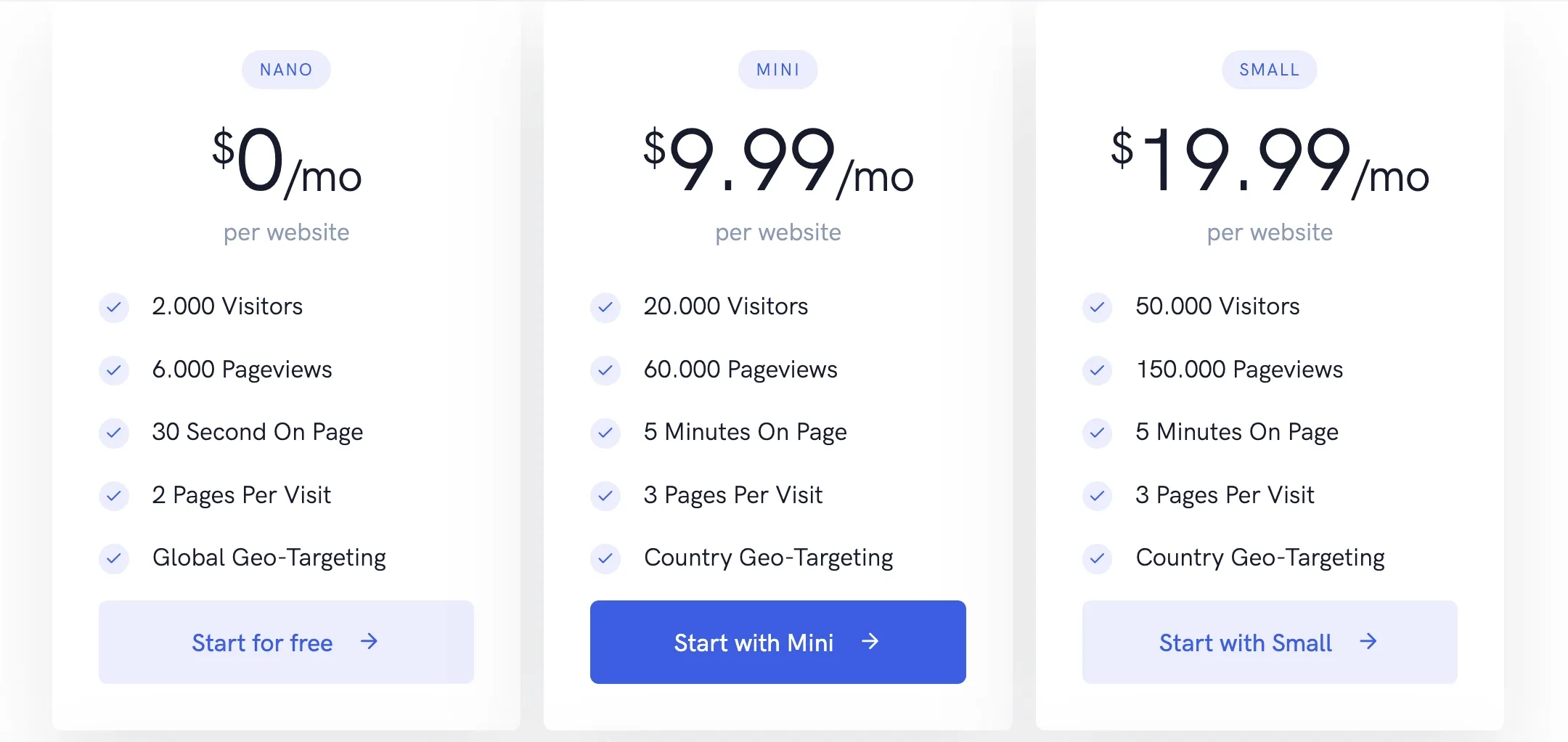
Free Traffic Bot landing page.
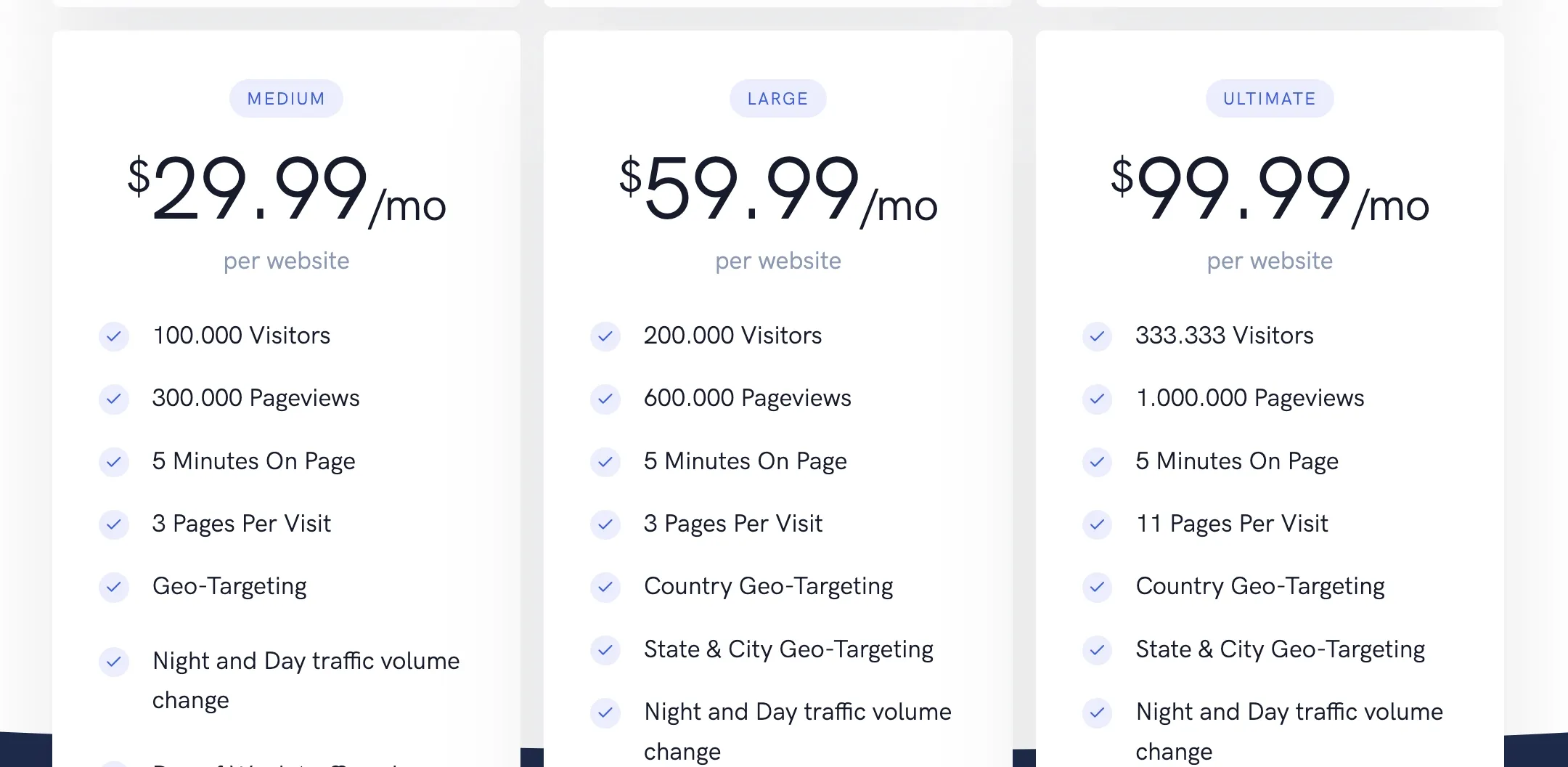
Free Traffic Bot landing page.
### Professional Plans
Professional plans include website traffic generated by residential ips. More traffic trackers recognize this type of traffic than traffic generated with data center ips. Professional website traffic is the best option for business websites and SEO improvements.
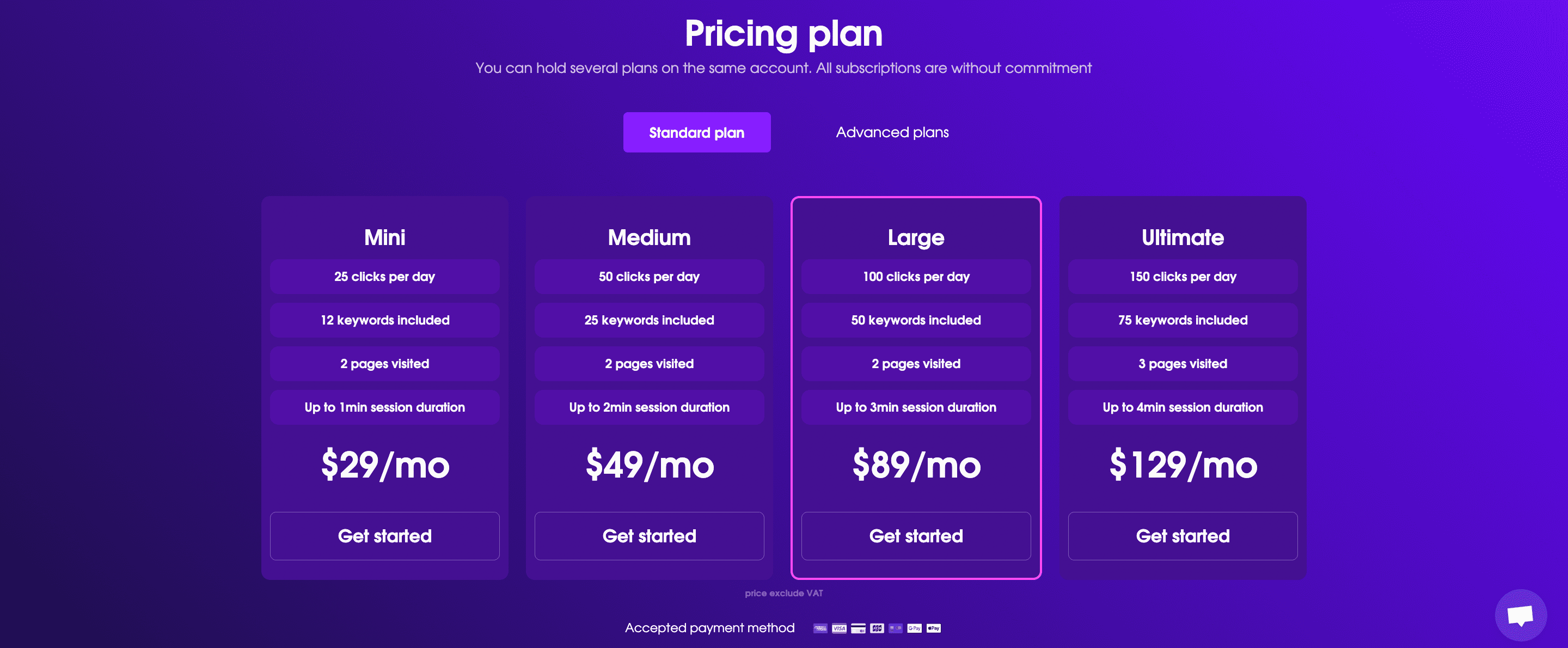
Free Traffic Bot landing page.
Assessing the Support Team
The support team of the platform is available 24/7 to assist you with any issues or questions you may have. Our the platform review can confirm that the support team is knowledgeable and helpful. The support team is knowledgeable and helpful and will do their best to resolve any problems you may encounter on time.
The support ofthe platform is outstandingas they will help you with your project to adjust it to your website. Their SEO Experts will advise you and recommend any changes to your projects to get the best results possible.
Evaluating Traffic Quality
the platform promises high-quality bot traffic that comes from natural human-visitors. They use advanced filters to prevent fraudulent and low-quality traffic, ensuring you get the most value from their service.The traffic quality is impressive, and the visitors are interested in your website's niche. With Traffic-Creator.com, you can be confident that the traffic you receive is of high quality.
Final Thoughts on Our the platform Review
In conclusion of our the platform review, the platform is a reliable and affordable traffic solution for your website. We recommend using their professional traffic plans to improve your search engine rankings on Google or similar search engines. - - The user dashboard is simple and easy to use - - Pricing is competitive - - Support team is available 24/7 - - Traffic quality is high. If you're looking for a way to increase your website's traffic
the platform is the second-best traffic bot. From our point of view, the platform deserves second place as it has an excellent support team and is optimized for SEO agencies. It is a great choice if you have to manage multiple traffic projects
Traffic Types Supported
Review Verdict
Our Take: This score is based on our rigorous testing methodology.
Frequently asked questions
What does Traffic Creator actually deliver?
Real browser sessions to the pages you choose, from the countries you select, with the session length and bounce behaviour you configure. They arrive in your own GA4 property where you can segment and count them.
Can Traffic Creator help my site rank?
It can help by making your engagement measurable. Clean, GA4-visible sessions give you data you can act on, and together with strong content, internal links and technical SEO that work can help you rank for the queries you target.
How do I start without paying?
Create an account and use the 2,000 free visits, no credit card required. Run them at one page with one declared source, check the result in GA4, and scale from there. Credits never expire.
Try Traffic Creator free
GA4-visible traffic, credits that never expire, 195+ countries - start with 2,000 free visits, no credit card.
Start your free trial →